Farm I 494
32 Images & Collections results for Farm I 494
32 results directly related
Exclude narrower terms
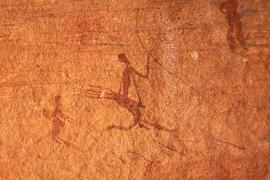
LEE LEE-RARI-LEE-RSA-SHX1-8.jpg
·
Item
·
01/01/1994
Part of Lee, Neil
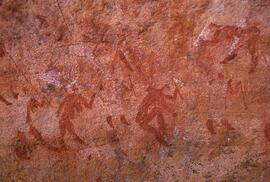
LEE LEE-RARI-LEE-RSA-SHX1-7.jpg
·
Item
·
01/01/1994
Part of Lee, Neil
LEE LEE-RARI-LEE-RSA-SHX1-6.jpg
·
Item
·
01/01/1994
Part of Lee, Neil
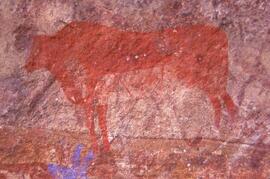
Depictions of cattle in rock art are common in some regions. Often they are accompanied by Iron Age people carrying broad-bladed iron spears, shields and knobkerries. Farm I 494
LEE LEE-RARI-LEE-RSA-SHX1-5.jpg
·
Item
·
01/01/1994
Part of Lee, Neil
LEE LEE-RARI-LEE-RSA-SHX1-4.jpg
·
Item
·
01/01/1994
Part of Lee, Neil

LEE LEE-RARI-LEE-RSA-SHX1-32.jpg
·
Item
·
01/01/1994
Part of Lee, Neil
Different kinds of bows are depicted in San art. From curved, comparatively straight and triple curved there are a variety of bows found in rock art.Depiction of arrows, whether they be real or not (arrows of sickness) are quite common in rock art.Arrows of sickness are said to be small, invisible arrows that malevolent shamans shoot into people whom they wish to make ill.The arrow points were traditionally made of bone and later of iron. Each point is distinctive; hunters recognise their own and others’ arrows. This is important because an animal belongs to the owner of the fatal arrow, and that person has the responsibility of distributing the meat equitably amongst all the people in the camp.
The poison for which the San are known is placed behind the point so as not to blunt it. The poison was made from snake venom, certain plants and beetle larvae. There is no known antidote, and the San are extremely careful indeed to avoid it getting into their eyes and skin. Men carry their arrows in quivers. Farm I 494

LEE LEE-RARI-LEE-RSA-SHX1-31.jpg
·
Item
·
01/01/1994
Part of Lee, Neil
Quivers are usually made of bark and are used to store arrows. The quiver, bow and other pieces of equipment were carried on a hunting bag, which is wider at one end than the other and which has a thong running its length so that it can be slung over a shoulder. Farm I 494

LEE LEE-RARI-LEE-RSA-SHX1-30.jpg
·
Item
·
01/01/1994
Part of Lee, Neil

LEE LEE-RARI-LEE-RSA-SHX1-3.jpg
·
Item
·
01/01/1994
Part of Lee, Neil

