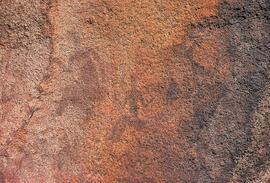
NMSA NMSA-RSA-FAM2-1.jpg
·
Item
·
1972
Part of Natal Museum
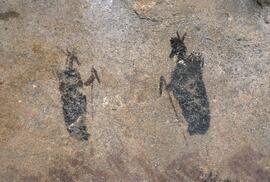
Nkandla
91 Images & Collections results for Nkandla
NMSA NMSA-RSA-FAM2-2.jpg
·
Item
·
1972
Part of Natal Museum
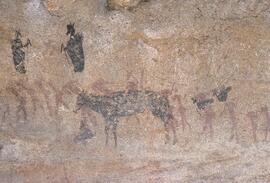
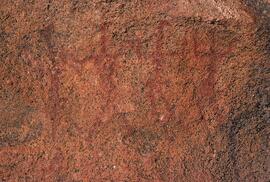
Depictions of flywhisks in rock art are quite common. They are important accessories for the trance dance in which they are used to keep arrows of sickness at bay.Paintings of them are a good indication of trance. Farm II 5 10859
NMSA NMSA-RSA-MHB1-1.jpg
·
Item
·
1972
Part of Natal Museum
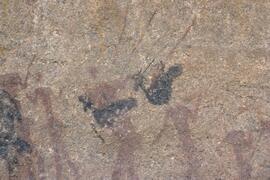
Bushman beliefs suggest that bags had a special significance beyond everyday use. Their relation to trance metaphors is illustrated in San mythology, where parallels were drawn between getting into a skin bag and getting into an animal- that is, taking on its potency. Therefore, bags painted next to a dance or by themselves, are probably an indication of a trance experience. Mkholombe I
NMSA NMSA-RSA-MHB3-2.jpg
·
Item
·
1972
Part of Natal Museum
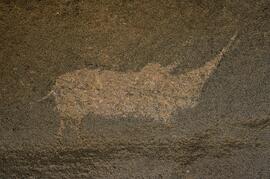
Rhebuck is one of the antelope that are most frequently depicted, after the eland. The rhebuck is comparable to the eland because it is often painted in shaded polychrome. Both eland and rhebuck are depicted in two colours, mainly red and white, even though they are more grey than red. Depictions of men with rhebuck heads are shamans. It is known that shamans with rhebuck heads controlled eland and harnessed their power to enter trance and to perform their various tasks, including rain-making. Mkholombe III