Warden

Elements area

Taxonomy

Code

Scope note(s)

    Source note(s)

      Display note(s)

        Equivalent terms

        Warden

          Associated terms

          Warden

            21 Images & Collections results for Warden

            RARI LEE RSA GOE1 10
            LEE LEE-RARI-LEE-RSA-GOE1-10.jpg · Item · 14/04/2002
            Part of Lee, Neil
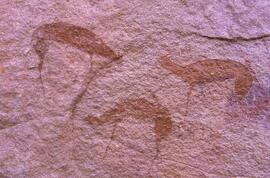
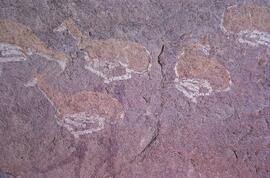
            Springbuck.

            In regions where rhebuck are absent, springbuck are occasionally depicted. They seem to have had associations similar to those of rhebuck.
            Reedsdell I
            RARI LEE RSA GOE1 11
            LEE LEE-RARI-LEE-RSA-GOE1-11.jpg · Item · 14/04/2002
            Part of Lee, Neil
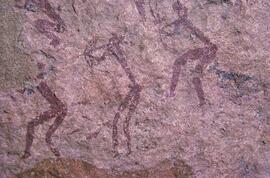
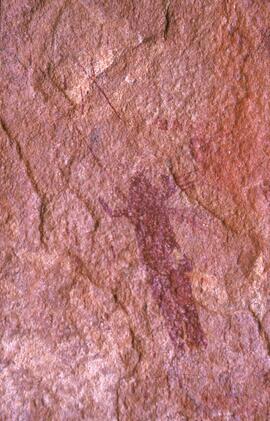
            Bows and Arrows.

            Different kinds of bows are depicted in San art. From curved, comparatively straight and triple curved there are a variety of bows found in rock art.Depiction of arrows, whether they be real or not (arrows of sickness) are quite common in rock art.Arrows of sickness are said to be small, invisible arrows that malevolent shamans shoot into people whom they wish to make ill.
            The arrow points were traditionally made of bone and later of iron. Each point is distinctive; hunters recognise their own and others’ arrows. This is important because an animal belongs to the owner of the fatal arrow, and that person has the responsibility of distributing the meat equitably amongst all the people in the camp.The poison for which the San are known is placed behind the point so as not to blunt it. The poison was made from snake venom, certain plants and beetle larvae. There is no known antidote, and the San are extremely careful indeed to avoid it getting into their eyes and skin. Men carry their arrows in quivers.
            Reedsdell I
            RARI LEE RSA GOE1 22
            LEE LEE-RARI-LEE-RSA-GOE1-22.jpg · Item · 01/01/1987
            Part of Lee, Neil
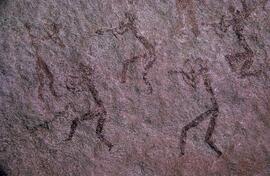
            Snakes.

            Depictions of snakes are not uncommon in rock art.Often it is difficult to detect the head because the snake is entering or leaving a crack or step in the rock face. On close inspection, it is noticeable that most are not depictions of real snakes at all.
            Moreover, bushman beliefs about snakes throw light on these puzzling features. It is believed that shamans used burnt snake powder to assist them in the control of their levels of trance. Like snakes, shamans go underground and then surface again when on out-of-body travel, and this probably explains why painted snakes often seem to slither in and out of the rock face.
            Rosstrevor I
            RARI LEE RSA GOE1 3
            LEE LEE-RARI-LEE-RSA-GOE1-3.jpg · Item · 01/01/1967
            Part of Lee, Neil
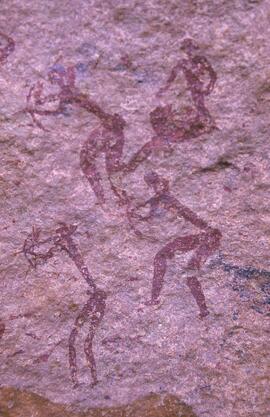
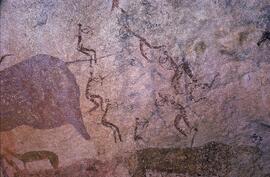
            Bows and Arrows.

            Different kinds of bows are depicted in San art. From curved, comparatively straight and triple curved there are a variety of bows found in rock art.Depiction of arrows, whether they be real or not (arrows of sickness) are quite common in rock art.Arrows of sickness are said to be small, invisible arrows that malevolent shamans shoot into people whom they wish to make ill.
            The arrow points were traditionally made of bone and later of iron. Each point is distinctive; hunters recognise their own and others’ arrows. This is important because an animal belongs to the owner of the fatal arrow, and that person has the responsibility of distributing the meat equitably amongst all the people in the camp.The poison for which the San are known is placed behind the point so as not to blunt it. The poison was made from snake venom, certain plants and beetle larvae. There is no known antidote, and the San are extremely careful indeed to avoid it getting into their eyes and skin. Men carry their arrows in quivers.
            Reedsdell I