
Identity area
Identifier
Authorized form of name
Parallel form(s) of name
Other form(s) of name
Type
Contact area
Description area
History
Background of the Recorder
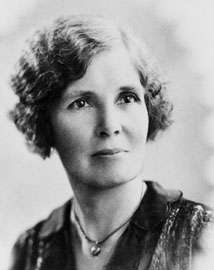
Dorothea Bleek was born in 1873 in Mowbray, a suburb in Cape Town. Several years later in 1884, the family moved to Germany where she was trained as a teacher. It was only in 1904 that the family moved back to South Africa. She was the fifth daughter of Dr Wilhelm Bleek, the noted philologist, who, with his sister-in-law, Lucy Lloyd, pioneered the enormous task of recording the language and folklore of the /Xam and the !Kung in the late 19th century. According to records, it was in 1905 that Helen Tongue introduced Dorothea Bleek to the processes of rock art recording in Cradock in the Eastern Cape, where Tongue had already been working. At the beginning of 1906, both made a train trip from Cradock to Bloemfontein and Ladybrand (Free State), where they continued recording various rock art sites. Most of the sites visited by Helen and Dorothea were identified from descriptions on George Stow's manuscript, Native Races of South Africa (1905). A second expedition by both was to the Malutis in Central Basutoland (Lesotho) in the summer of 1906/07. Their third and last expedition was a train trip to Fauresmith (Free State) and a wagon to Luckhoff in the Karoo (Western Cape). Bleek made further expeditions to various areas rich in rock art, in South Africa and neighboring countries. In 1910 she visited the area near Prieska in the Northern Cape, from where some of the San informants interviewed by her father and aunt had originated. Subsequent travels included trips to other parts of the Northern Cape, the eastern Transvaal, South West Africa (present Namibia), Bechuanaland (Botswana), Angola and Tanganyika (Tanzania). In 1923 she published The Mantis and His Friends: Bushman Folklore, and after her death a Bushman Dictionary was published. The notebooks she inherited from her father and aunt were donated to the University of Cape Town when she died in 1948.